Plant safety for cats
Is tuberose (रजनीगंधा) safe for cats?
?Not assessedNot assessed for cats — here's what we know
Rajnigandha (tuberose) hasn't been assessed for cats — there's no cat data either way. The bigger worry: florists often add true lilies, which are deadly, to rajnigandha bouquets. Check every bouquet.
Why not assessed: No cat data — but check rajnigandha bouquets for true lilies.
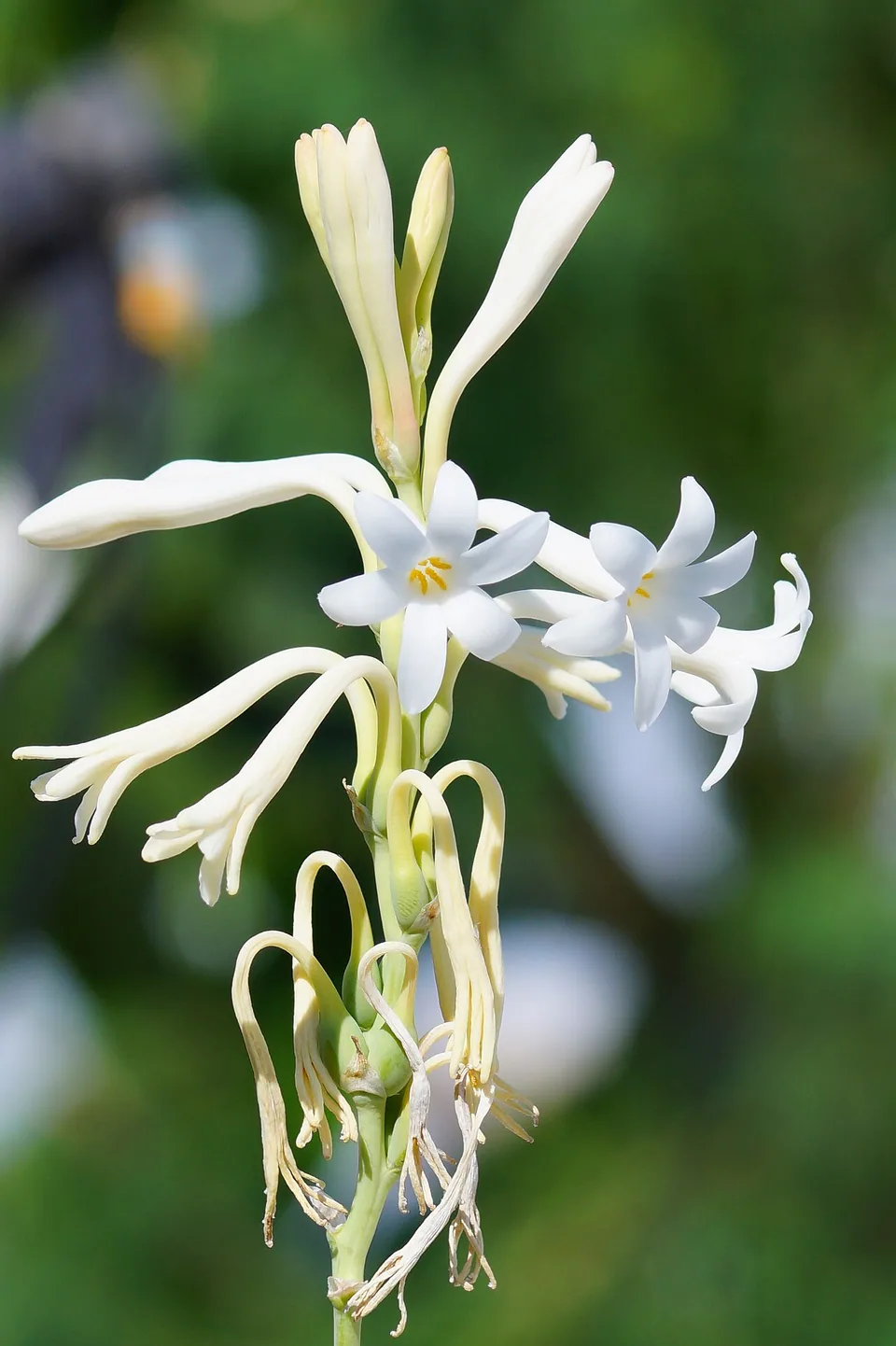
- Name
- Tuberosealso Rajnigandha, Gulchhadi
- Hindi
- रजनीगंधा · rajnigandha
- Botanical name
- Agave amica (syn. Polianthes tuberosa) · Asparagaceae
- Other Indian names
- Marathigulchhadi
- Telugunelasampengi
- Tamilnilasampangi
- Kannadasugandharaja
The evidence
Not assessed for cats — here's what we know. Not assessed is not the same as safe — and not proof of danger either.
How to recognise it
- Tall spikes of waxy, white, very fragrant tubular flowers
- Sold as long sticks in bunches
Look-alikes and name traps
Make sure the bouquet holds no true lilies.
What to do
No vet database has assessed it for cats — so there is no verdict either way.
- A nibble is not known to be dangerous. If your cat ate a lot, or seems unwell, call your vet and take the plant or a photo.
- Don't make your cat vomit at home unless a vet tells you to.
- If the bouquet had lilies in it, treat it as a lily emergency.
Where Indian cats meet it
A wedding and puja cut flower — vase sticks and stage décor.
Sources
- NC State Plant Toolbox: Polianthes tuberosa (no poison data) (human toxicity data)
- ASPCA: Plants toxic and non-toxic to cats (full list)
Facts last checked
General information for cat parents, not a diagnosis or a treatment plan. The facts come from ASPCA, Pet Poison Helpline, International Cat Care, the Merck Veterinary Manual and the other sources listed on every page — and we say so when the evidence comes from dogs or people. If your cat may have eaten something harmful, call your vet.