Plant safety for cats
Is chinaberry (बकायन / बकैन) toxic to cats?
SevereListed toxic to cats by ASPCA
Yes — chinaberry (bakain) is toxic to cats, the ripe yellow berries most of all: they cause vomiting, diarrhoea, weakness and seizures. It is often mistaken for neem, so learn the difference.
Why severe: Its ripe berries can cause seizures — and the tree is easily mistaken for neem.
- Name
- Chinaberryalso Bakain, Bakayan, Persian lilac, Pride of India, Dharek
- Hindi
- बकायन / बकैन · bakayan / bakain
- Botanical name
- Melia azedarach · Meliaceae
- Other Indian names
- Marathiबकाणनिंब (bakan-nimb)
- Bengaliঘোড়ানিম (ghoda-neem)
- Punjabiਡੇਕ (dek)
- Kannadaಕಾಡು ಬೇವು (kadu bevu, 'wild neem')
- Malayalamശീമവേപ്പ് (sheema-veppu)
Toxic parts
Ripe fruit (berries) worst, but the bark, leaves and flowers too.
What's in it
Meliatoxins (tetranortriterpenes).
How to recognise it
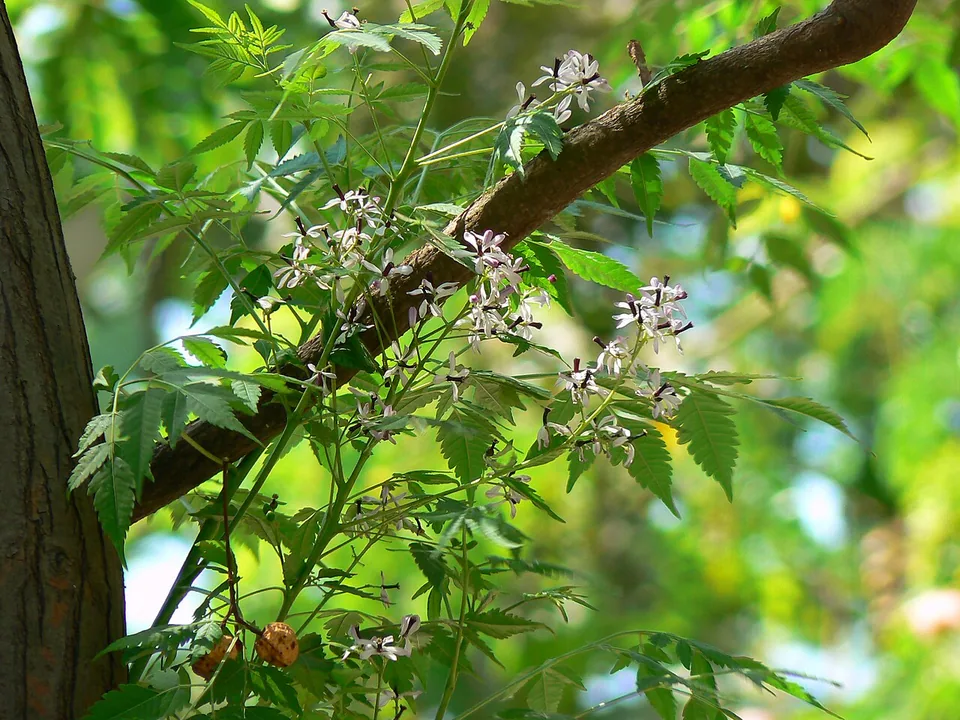
- Deciduous tree with twice-divided leaves and toothed leaflets
- Fragrant lilac flower sprays in spring
- Round yellow berries hanging on bare branches in winter
Look-alikes and name traps
Neem or bakain? Neem has once-divided leaves with curved, saw-edged leaflets, small white flowers and olive-shaped fruit. Several Indian names for bakain literally mean 'neem' (ghoda-neem, kadu bevu).
Symptoms to watch for
- Vomiting and diarrhoea (bloody after large amounts)
- Drooling
- Low mood, weakness
- Seizures
- Paralysis after large amounts
What to do — now
Go to a vet now — don't wait for signs. Berries eaten is a vet emergency.
- Take your cat, a piece of the plant (or a clear photo) and tell the vet what was eaten, when and how much.
- Don't make your cat vomit at home unless a vet tells you to.
- No milk, oil, salt water or home remedies.
Where Indian cats meet it
A common North Indian roadside, park and courtyard tree.
Sources
- ASPCA Animal Poison Control: Chinaberry tree
- ASPCA Animal Poison Control: Pride of India
- Pet Poison Helpline: Chinaberry
- Wikipedia: Melia azedarach (names and where it grows)
Facts last checked
General information for cat parents, not a diagnosis or a treatment plan. The facts come from ASPCA, Pet Poison Helpline, International Cat Care, the Merck Veterinary Manual and the other sources listed on every page — and we say so when the evidence comes from dogs or people. If your cat may have eaten something harmful, call your vet.