Plant safety for cats
Is rosary pea (गुंजा / रत्ती) toxic to cats?
DeadlyListed toxic to cats by ASPCA
Yes — rosary pea (gunja, ratti) seeds are deadly to cats once chewed or cracked: the abrin inside causes severe, sometimes bloody vomiting and diarrhoea, tremors and shock. Treat seed jewellery and malas as poison.
Why deadly: A chewed or cracked seed releases abrin — treat seed beads and jewellery as poison.
- Name
- Rosary peaalso Gunja, Ratti, Crab's eye, Jequirity bean
- Hindi
- गुंजा / रत्ती · gunja / ratti
- Botanical name
- Abrus precatorius · Fabaceae
- Other Indian names
- Marathiगुंज (gunj)
- Bengaliকুঁচ (kunch)
- Tamilகுன்றி (kunri)
- Teluguగురివింద (guruvinda)
- Kannadaಗುಲಗಂಜಿ (gulaganji)
- Gujaratiચણોઠી (chanothi)
Toxic parts
The seeds — dangerous once the hard, glossy seed coat is chewed or broken.
What's in it
Abrin (a toxalbumin similar to ricin) and abric acid.
How to recognise it
- Slender climber with feathery leaves made of many small leaflets
- Short pods
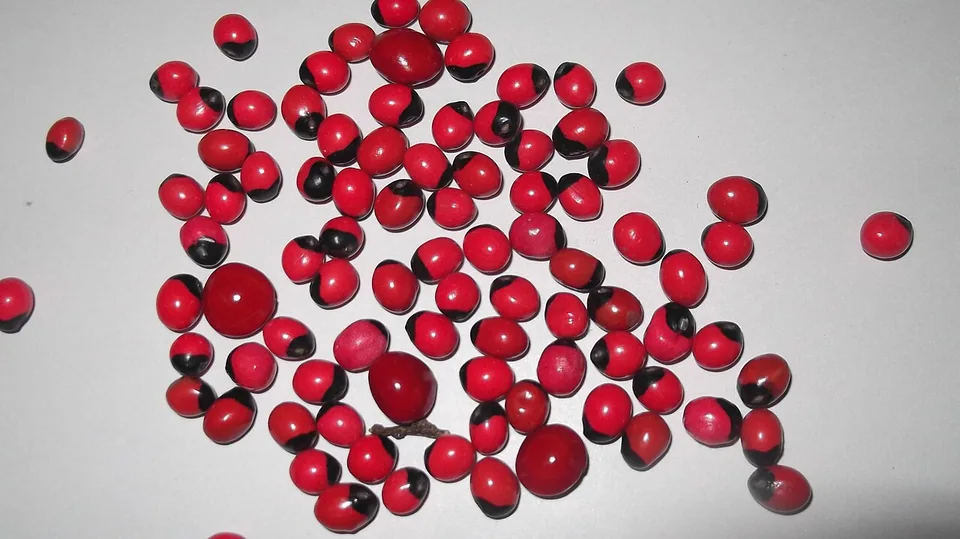
- Glossy scarlet seeds with a black spot at one end
- Rose-pink flowers
Look-alikes and name traps
All-red craft seeds with no black spot are usually a different plant (Adenanthera) — not assessed for cats, so keep them away too.
Symptoms to watch for
- Severe vomiting and diarrhoea, sometimes with blood
- Belly pain
- Tremors
- Fast heart rate, fever
- Shock
What to do — now
Go to a vet now — don't wait for signs. A chewed seed is an emergency.
- Take your cat, a piece of the plant (or a clear photo) and tell the vet what was eaten, when and how much.
- Don't make your cat vomit at home unless a vet tells you to.
- No milk, oil, salt water or home remedies.
- Check any seed necklace, mala or craft item your cat played with for missing or cracked beads.
- Keep seed jewellery and craft kits shut away.
Where Indian cats meet it
A wild climber in hedges and scrub. The seeds are strung into beads, malas and jewellery, used in crafts, and were once the 'ratti' weight for gold.
Sources
- ASPCA Animal Poison Control: Rosary pea
- Pet Poison Helpline: Precatory bean
- Wikipedia: Abrus precatorius (names and where it grows)
Facts last checked
General information for cat parents, not a diagnosis or a treatment plan. The facts come from ASPCA, Pet Poison Helpline, International Cat Care, the Merck Veterinary Manual and the other sources listed on every page — and we say so when the evidence comes from dogs or people. If your cat may have eaten something harmful, call your vet.