Plant safety for cats
Is sago palm (साइकस) toxic to cats?
DeadlyListed toxic to cats by ASPCA
Yes — sago palm (cycas) is deadly to cats. Every part is poisonous, the orange-red seeds most of all, and liver failure can follow 2–3 days later. Go to a vet even if your cat seems fine.
Why deadly: Liver failure within days — and the orange-red seeds are the most poisonous part.
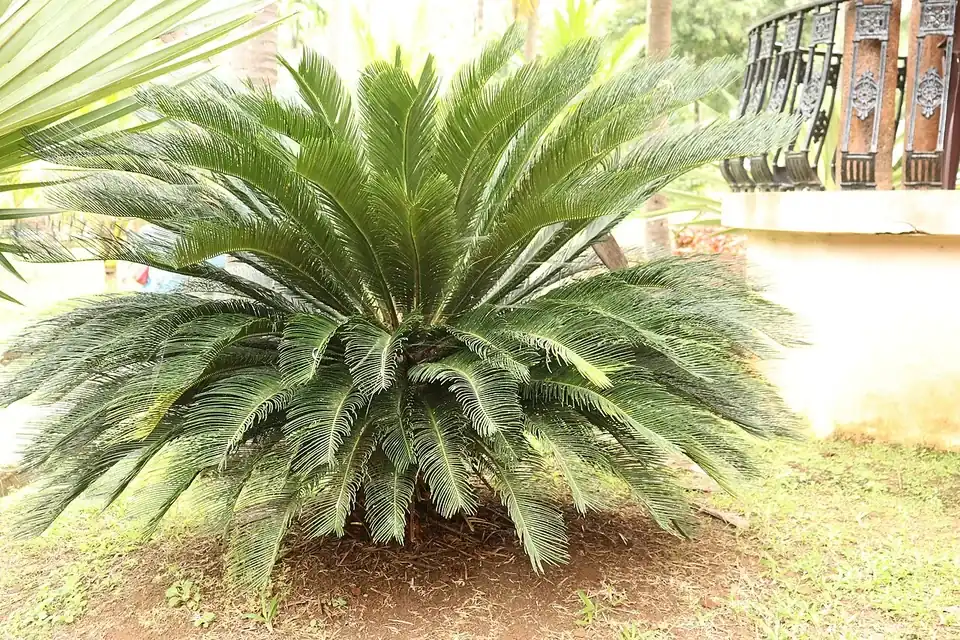
- Name
- Sago palmalso Cycas, King sago, Queen sago
- Hindi
- साइकस · cycas
- Botanical name
- Cycas revoluta and Cycas circinalis · Cycadaceae
- Other Indian names
- Malayalamഈന്ത് (eenth) — C. circinalis
- Teluguకామాక్షి (kamakshi) — C. circinalis
- Bengaliসাগু সাইকাস (sagu cycas)
Toxic parts
All parts; the orange-red seeds (nuts) in the centre of female plants are the worst.
What's in it
Cycasin (plus BMAA) — it damages the liver and gut and can affect the nerves.
How to recognise it
- Not a real palm: stiff, glossy, dark-green feather-like fronds in a rosette
- A short, thick, shaggy trunk
- Hard leaflets with needle-sharp tips
- Female plants hold a central cone of orange-red seeds
Look-alikes and name traps
Often sold next to real palms. Areca palm and parlour palm are listed non-toxic — their fronds are soft and arching, not stiff and needle-tipped. A young cycad can also look like a ZZ plant.
Symptoms to watch for
- Drooling, vomiting, diarrhoea (sometimes black or bloody)
- Increased thirst
- Weakness, wobbliness, tremors or seizures
- Yellow gums or eyes and bruising — signs of liver failure
Gut signs from 15 minutes to a few hours; nerve signs within about 4 hours; liver failure in 2–3 days (PetMD, vet-reviewed). About half of poisoned animals survive even with intensive care — a figure mostly from dogs.
What to do — now
Go to a vet now — don't wait for signs. Liver damage is delayed, so a cat that looks well still needs care.
- Take your cat, a piece of the plant (or a clear photo) and tell the vet what was eaten, when and how much.
- Don't make your cat vomit at home unless a vet tells you to.
- No milk, oil, salt water or home remedies.
- Take a seed or a frond with you.
- Pick up fallen seeds from the pot and the floor.
Where Indian cats meet it
Gardens, hotel and office landscaping, society entrances and nurseries. Cycas circinalis grows wild in the Western Ghats.
Cat-safe swap: A real palm: areca palm or parlour (bamboo) palm, both listed non-toxic.
Sources
- ASPCA Animal Poison Control: Sago palm
- ASPCA Animal Poison Control: Cycads
- Pet Poison Helpline: Sago palm
- PetMD: Sago palm poisoning in cats (vet-reviewed)
- Wikipedia: Cycas circinalis (names and where it grows)
Facts last checked
General information for cat parents, not a diagnosis or a treatment plan. The facts come from ASPCA, Pet Poison Helpline, International Cat Care, the Merck Veterinary Manual and the other sources listed on every page — and we say so when the evidence comes from dogs or people. If your cat may have eaten something harmful, call your vet.