Plant safety for cats
Is yellow oleander (पीला कनेर) toxic to cats?
DeadlyListed toxic to cats by ASPCA
Yes — yellow oleander (peela kaner) is deadly to cats. It carries the same kind of heart poison as kaner, worst in the seeds, which are a known cause of human deaths in South India. Go to a vet at once.
Why deadly: Heart poisons, worst in the seeds. Rated deadly from its toxin class and human deaths — no cat case has been published, and ASPCA's short list of signs understates the risk.
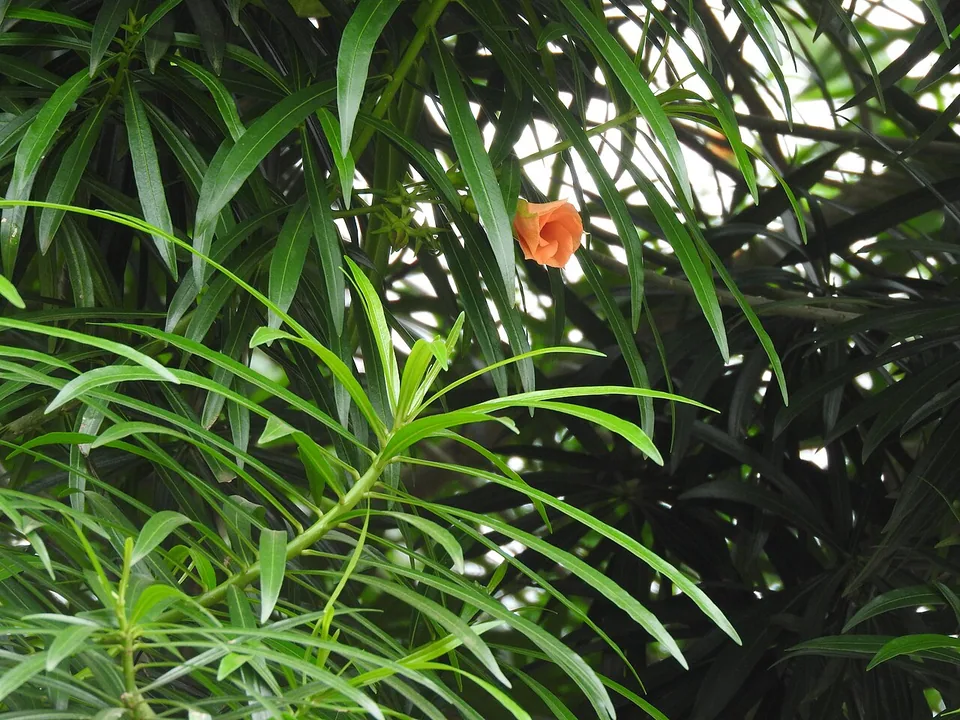
- Name
- Yellow oleanderalso Peela kaner, Pili kaner, Lucky nut, Thevetia
- Hindi
- पीला कनेर · peela kaner
- Botanical name
- Cascabela thevetia (syn. Thevetia peruviana) · Apocynaceae
- Other Indian names
- Punjabiਪੀਲੀ ਕਨੇਰ (pili kaner)
- Tamilmanjal arali
- Malayalamമഞ്ഞരളി (manjarali)
- Teluguపచ్చ గన్నేరు (pachcha ganneru)
- Bengaliকলকে ফুল (kolke phul)
Toxic parts
The whole plant; the seeds inside the fruit are the most dangerous.
What's in it
Cardenolides (thevetins, peruvoside) — heart poisons.
How to recognise it
- Small tree or large shrub
- Narrow, glossy, strap-like leaves
- Yellow (sometimes orange or cream) funnel-shaped flowers
- Fruit turns from green to red-black around one large 'lucky nut' seed
Look-alikes and name traps
In everyday Hindi 'kaner' can mean both plants — and both are deadly: see oleander (kaner).
Symptoms to watch for
- Vomiting, diarrhoea
- Slow heart rate
- Weakness, collapse
What to do — now
Go to a vet now — don't wait for signs. Its heart poisons need a vet's monitoring.
- Take your cat, a piece of the plant (or a clear photo) and tell the vet what was eaten, when and how much.
- Don't make your cat vomit at home unless a vet tells you to.
- No milk, oil, salt water or home remedies.
- Pick up fallen fruit and seeds under the tree.
Where Indian cats meet it
Parks, gardens and roadsides; naturalised in the drier parts of India, and the yellow flowers are used in worship. A Delhi park photo of this tree is labelled simply 'Kaner'.
Cat-safe swap: For a yellow flowering shrub: ixora comes in yellow too and is listed non-toxic.
Sources
- ASPCA Animal Poison Control: Yellow oleander
- INCHEM: Thevetia peruviana monograph (human toxicology)
- JISTOX: yellow oleander seed poisoning in Indian children (human data)
- Wikipedia: Cascabela thevetia (names and where it grows)
Facts last checked
General information for cat parents, not a diagnosis or a treatment plan. The facts come from ASPCA, Pet Poison Helpline, International Cat Care, the Merck Veterinary Manual and the other sources listed on every page — and we say so when the evidence comes from dogs or people. If your cat may have eaten something harmful, call your vet.