Plant safety for cats
Is rubber plant (रबर वृक्ष) toxic to cats?
MildListed toxic to cats by ASPCA
Yes — rubber plant and weeping fig are mildly toxic to cats: their milky sap irritates the mouth, stomach and skin, causing drooling, vomiting and diarrhoea.
Why mild: An irritating milky sap: mouth, stomach and skin irritation.
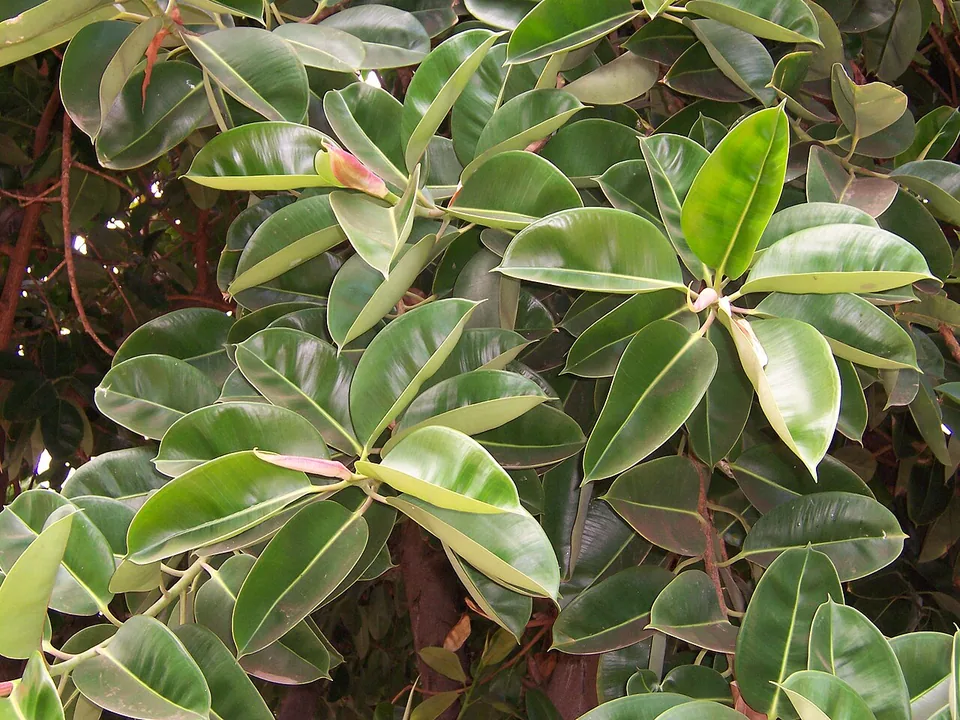
- Name
- Rubber plantalso Indian rubber plant, Weeping fig, Ficus
- Hindi
- रबर वृक्ष · rabar vriksh
- Botanical name
- Ficus elastica and Ficus benjamina · Moraceae
Toxic parts
The milky sap in leaves and stems.
What's in it
Ficin (an enzyme) and ficusin (a psoralen) in an irritating milky sap.
How to recognise it
- Rubber plant: large, thick, glossy oval leaves — dark green, burgundy or variegated
- A red sheath around each new leaf
- White sap where a leaf or stem breaks
- Weeping fig: small, pointed, glossy leaves on drooping branches
Symptoms to watch for
- Drooling, not eating
- Vomiting, diarrhoea
- Skin irritation where sap touched
What to do
Usually settles on its own — but keep an eye on your cat.
- Take the plant away and note how much was chewed.
- Call your vet if vomiting or diarrhoea keeps going, your cat stops eating, or seems weak or wobbly.
- Don't make your cat vomit at home unless a vet tells you to.
Where Indian cats meet it
Living rooms, offices and building lobbies.
Cat-safe swap: Peperomia obtusifolia ('baby rubber plant') — listed non-toxic.
Sources
- ASPCA Animal Poison Control: Weeping fig
- ASPCA Animal Poison Control: Indian rubber plant
- ASPCA Animal Poison Control: Fig
- Pet Poison Helpline: Ficus
- Pet Poison Helpline: Weeping fig
- Hindi Wikipedia: रबर वृक्ष (Hindi name)
Facts last checked
General information for cat parents, not a diagnosis or a treatment plan. The facts come from ASPCA, Pet Poison Helpline, International Cat Care, the Merck Veterinary Manual and the other sources listed on every page — and we say so when the evidence comes from dogs or people. If your cat may have eaten something harmful, call your vet.