Plant safety for cats
Is catnip (कैटनिप) toxic to cats?
MildListed toxic to cats by ASPCA
Mostly safe — catnip is fine in small amounts, and Cornell even suggests it for cats that crave greens. Eating a lot can cause vomiting or diarrhoea, which is why ASPCA lists it as toxic.
Why mild: Fine in small amounts; a lot can cause vomiting or diarrhoea. ASPCA lists it, while Cornell recommends it.
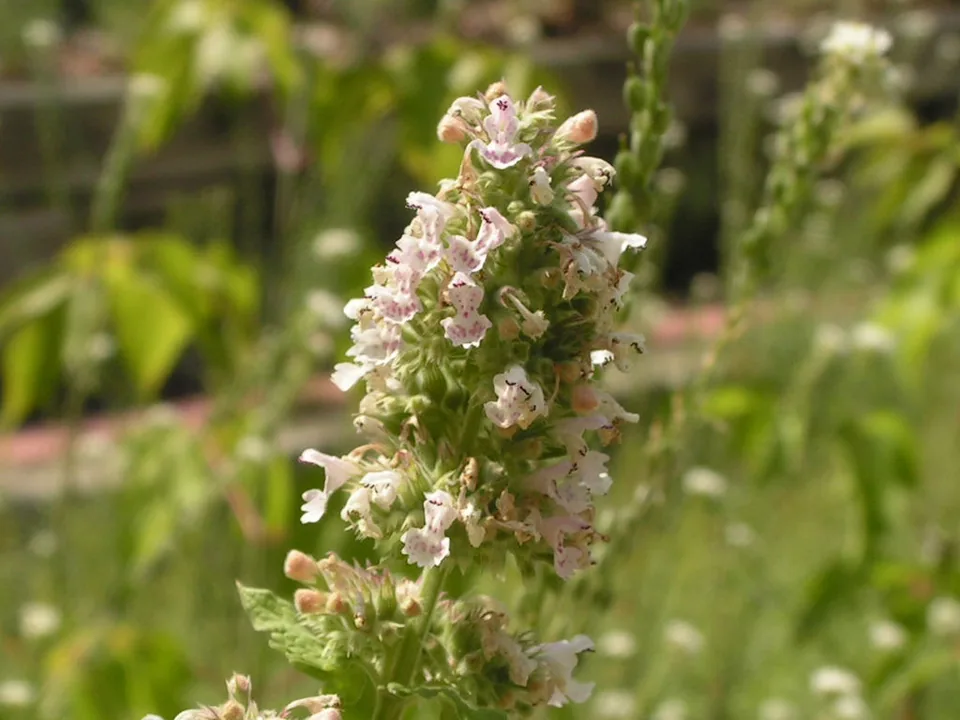
- Name
- Catnipalso Catmint
- Hindi
- कैटनिप
- Botanical name
- Nepeta cataria · Lamiaceae
What's in it
Nepetalactone.
How to recognise it
- Soft, grey-green, heart-shaped, toothed leaves
- Small white or lilac flowers on spikes
Look-alikes and name traps
A mint-family plant, like pudina.
Symptoms to watch for
- Vomiting or diarrhoea after a lot
- Sleepiness in some cats, excitement in others
What to do
Small amounts are fine.
- Take the plant away and note how much was chewed.
- Call your vet if vomiting or diarrhoea keeps going, your cat stops eating, or seems weak or wobbly.
- Don't make your cat vomit at home unless a vet tells you to.
Where Indian cats meet it
Mostly sold dried in pet shops.
Cat-safe swap: Cat grass (oat or wheat) for daily nibbling.
Sources
- ASPCA Animal Poison Control: Catnip
- Cornell Feline Health Center: Destructive behaviour (cats and houseplants, PDF)
Facts last checked
General information for cat parents, not a diagnosis or a treatment plan. The facts come from ASPCA, Pet Poison Helpline, International Cat Care, the Merck Veterinary Manual and the other sources listed on every page — and we say so when the evidence comes from dogs or people. If your cat may have eaten something harmful, call your vet.